July 21, 2026
Press Statement by Kalikasan PNE on the Dismantling of the Sitio Linao Barricade, Brooke’s Point, Palawan
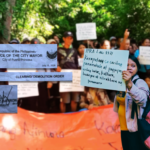
Kalikasan People’s Network for the Environment (Kalikasan PNE) expresses its unwavering solidarity with the Pala’wan Indigenous communities of Sitio Linao, Barangay Ipilan, Brooke’s Point, Palawan, following the dismantling of their peaceful anti-mining barricade on 29 June 2026. The network calls on the public to support the community’s continuing struggle to defend their ancestral lands, forests, watersheds, and livelihoods from destructive mining.
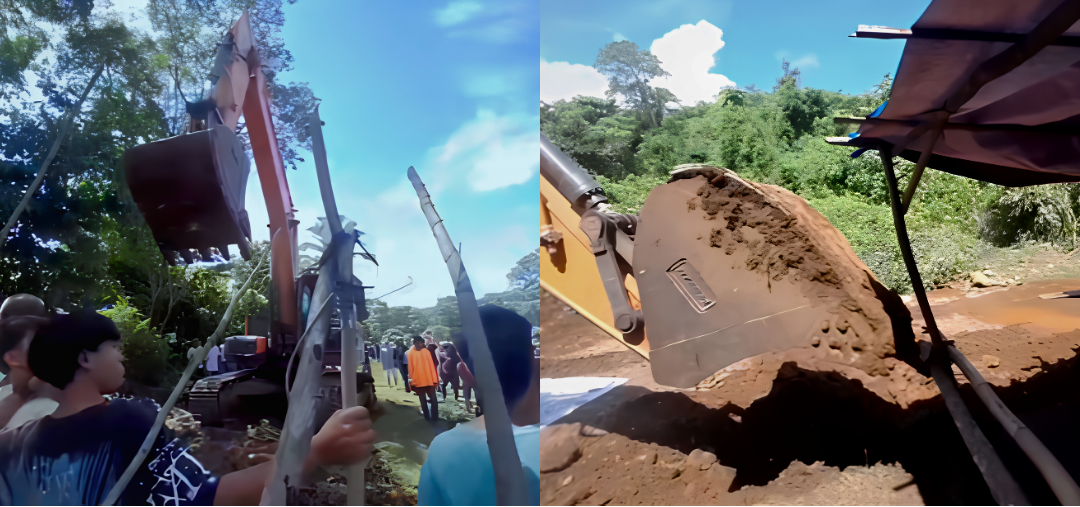
For nearly three months, Pala’wan residents maintained a community barricade after heavy equipment of Calmia Nickel Inc., operator of MacroAsia Mining Corporation’s Infanta Nickel Project, entered areas they identify as part of their ancestral domain without their Free, Prior and Informed Consent (FPIC). The barricade became an assertion of Indigenous rights and a defense of the forests and watersheds that sustain Indigenous communities, farmers, and fisherfolk across Brooke’s Point.
The Infanta Nickel Project covers more than 1,100 hectares across the barangays of Ipilan, Mambalot, and Maasin in Brooke’s Point. Operated by Calmia Nickel Inc. under MacroAsia Mining Corporation’s Mineral Production Sharing Agreement, the project is located beside the Mount Mantalingahan Protected Landscape, a UNESCO Biosphere Reserve that supports globally significant biodiversity and watersheds vital to surrounding communities.
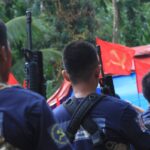
According to community leaders, the barricade was dismantled through an operation involving the National Commission on Indigenous Peoples (NCIP), the Philippine National Police (PNP), the Department of Environment and Natural Resources (DENR), the Mines and Geosciences Bureau (MGB), and other government agencies pursuant to an NCIP order that the community rejects as illegitimate. According to residents, a community leader’s child was injured during the operation. Indigenous leaders likewise question the recognition of organizations they say do not represent the traditional custodians of the affected ancestral domain.
“The dismantling of the barricade is an attack on the collective right of Indigenous Peoples to defend their ancestral lands. It demonstrates how State institutions continue to prioritize mining interests of local elites and private companies over the rights and welfare of Indigenous communities,” said Cathleen De Guzman, National Coordinator for Kalikasan PNE.
“The transition away from fossil fuels cannot be used to justify environmental destruction and human rights violations. There can be no just transition if Indigenous Peoples are displaced and environmental defenders are silenced.” they added.
Kalikasan stressed that what happened in Brooke’s Point is part of a wider pattern affecting environmental defenders across the country.
A joint study by Kalikasan PNE and Global Witness found that militarization, red-tagging, criminalization, surveillance, judicial harassment, and other attacks against environmental defenders have increasingly accompanied mining expansion in the Philippines. Instead of protecting communities asserting their rights, State institutions have repeatedly been used to suppress legitimate environmental and Indigenous resistance, creating an environment where extractive projects can move forward despite sustained opposition.
This pattern is unfolding amid the global race of the United States and China for transition minerals such as nickel. Global Witness has documented that critical mineral mining worldwide is associated with an average of 111 violent incidents and protests every year, demonstrating that the energy transition is increasingly generating conflict where governments fail to uphold human rights.
Kalikasan warned that the Marcos Jr. administration is aggressively positioning the Philippines as a major supplier of transition minerals through policies promoting expanded mining and closer cooperation with foreign governments seeking to secure critical mineral supply chains. Initiatives such as the Philippines-United States cooperation on critical minerals and the Pax Silica initiative risk accelerating extraction in biodiversity hotspots and Indigenous territories to meet foreign demand.
“The Marcos Jr. administration must be held accountable for policies that prioritize foreign mineral demand over Indigenous Peoples’ rights, environmental protection, and genuine national development. Rather than repeating the country’s long history of exporting raw minerals for the benefit of foreign industries, the government must uphold national patrimony and ensure that the country’s mineral wealth primarily serves the Filipino people through national industrialization.”
The network echoed the community’s calls for government authorities to halt activities that threaten ancestral domains and communities, refrain from issuing or renewing permits for destructive mining projects, conduct an independent review of the FPIC and permitting process, respect Indigenous self-determination, and protect Palawan’s forests and watersheds for future generations.
“The struggle in Brooke’s Point is the struggle of all Filipinos,” De Guzman concluded. “As foreign demand for Philippine transition minerals grows, we must remain vigilant, defend our national patrimony from imperialist exploitation, hold the Marcos Jr. administration accountable, and stand with the Indigenous communities and environmental defenders who continue to protect the country’s last ecological frontiers.”