FOR IMMEDIATE RELEASE
September 17, 2026
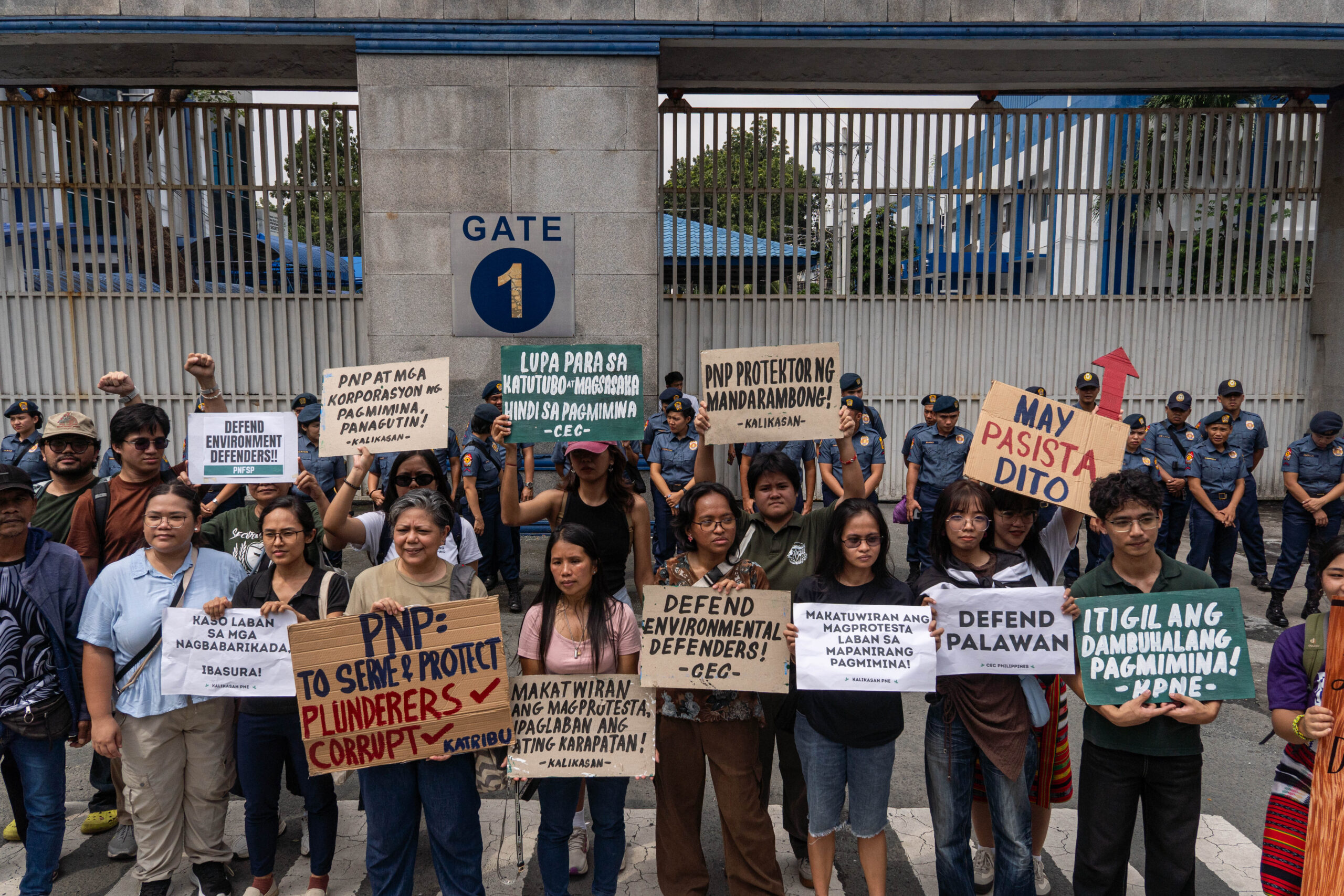
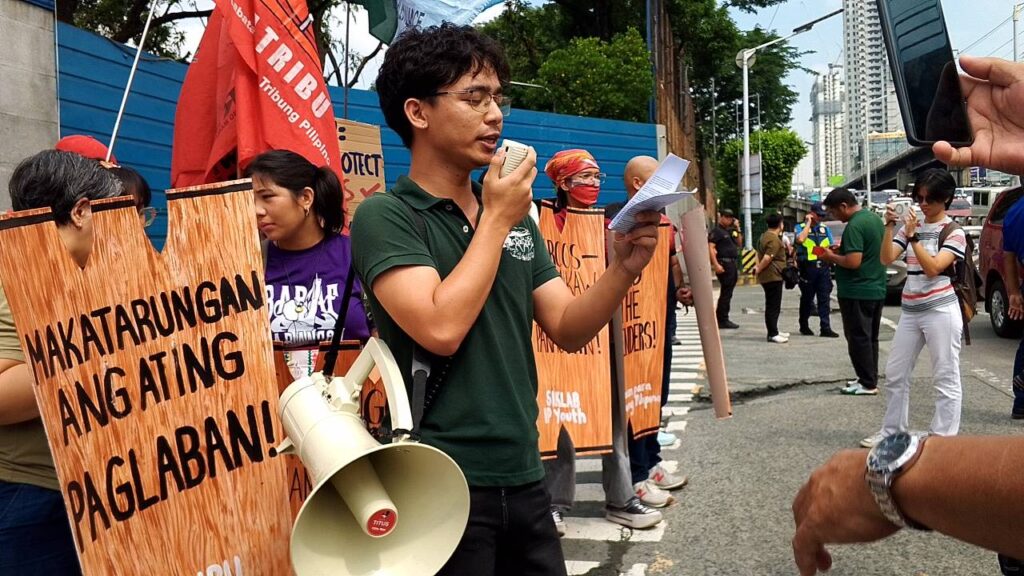
QUEZON CITY – Environmental defenders held an action today at the Philippine National Police headquarters in Quezon City following numerous state-sponsored attacks against communities resisting large-scale mining. The protest, led by Kalikasan People’s Network for the Environment, seeks to hold the Philippine National Police (PNP) and Marcos Jr. ‘s government accountable for systematic rights violations targeting those defending their mountains and ancestral lands.
Community leaders from Kasibu arrived at PNP headquarters bearing witness to police brutality and Strategic Lawsuits Against Public Participation (SLAPP) cases filed against them by North Luzon Mineral Resources Corporation after their barricades were forcibly dismantled by PNP Nueva Vizcaya. Meanwhile, peasant leaders, lay workers, and human rights advocates in the Cagayan Valley now face financing terrorism charges simply for conducting relief operations during emergencies.
In Metro Manila alone, activists have been hit with trumped-up cases following protests against Pax Silica, the Luzon Economic Corridor, demands for wage increases, and government corruption.
At present, more than 70 individuals have been charged with fabricated cases, with no fewer than 30 total complaints filed in connection with the blockade protesting the mine in Nueva Vizcaya. These are not legal proceedings—they are weapons of corporate intimidation deployed by the North Luzon Mineral Resources Corporation to terrorize citizens daring to resist massive mining operations on their soil.
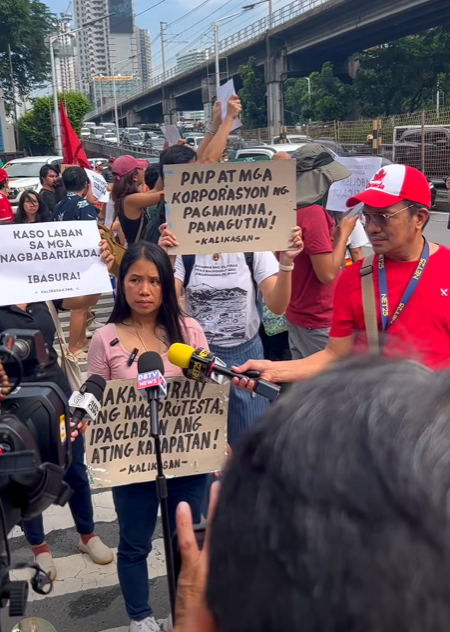
“I wish to voice my grievances regarding the arrival of a large police force at our barricades. They insisted that our checkpoint was prohibited and that we had no right to set it up. Had we not done so, the mining company personnel could have freely entered and exited to destroy the land that sustains our livelihood” said Lei Jin Dugay of KIRED (Kasibu Intertribal Response for Ecological Development), one of the community members facing trumped-up charges.
This wave of repression is not isolated. In June 2026, anti-mining barricades in Palawan were forcibly dismantled by government forces—including the NCIP, PNP, DENR, and MGB—following an operation that community leaders report injured a child during the dismantling of the Sitio Linao barricade in Brooke’s Point. The Pala’wan Indigenous communities had maintained their barricade for nearly three months after Calmia Nickel Inc. entered their ancestral domain without Free, Prior and Informed Consent (FPIC). In Mankayan, Benguet, residents continue their standoff with Crescent Mining and Development Corporation (CMDC) over a 534-hectare mining project on ancestral land. A court order was issued to clear a 70-vehicle barricade where over 450 residents had gathered to oppose CMDC’s mineral exploration. Meanwhile, in Sibuyan Island, Romblon, Altai Philippines Mining Corporation (APMC) has faced sustained opposition despite moving forward with its mining project. Residents reported 31,000 signatures collected against the operation, with the Makabayan bloc filing a House Resolution for congressional inquiry on September 9, 2026. The community raised concerns about the absence of required local clearances and FPIC processes.
The Cagayan 11, peasant leaders and community organizers, now face charges under Section 8, Paragraph 2 of Republic Act No. 10168, or the Terrorism Financing Prevention and Suppression Act of 2012. The allegations rest entirely on testimonies from alleged former rebels who claimed they received goods from activists inside an alleged New People’s Army encampment in 2019. These fabricated charges follow a familiar pattern of criminalization, to silence resistance and protect extractive capital.
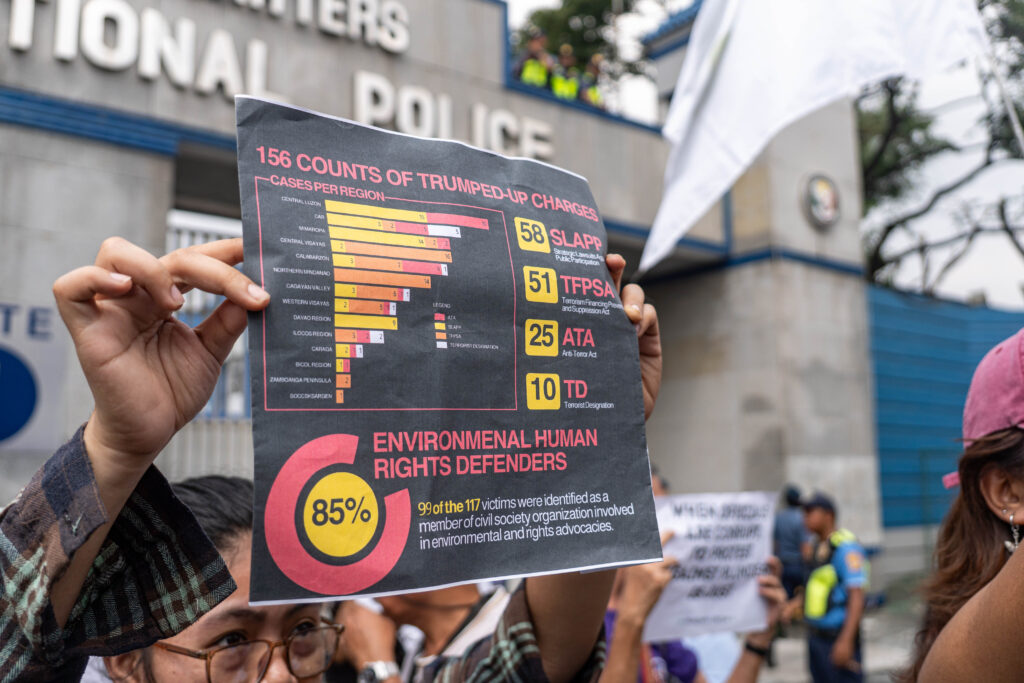
Global Witness has marked the Philippines for its 13th consecutive year as the deadliest country in Asia for environmental defenders. Rising human rights violations and the criminalization of land and environmental defenders, especially in mining communities, point to a coordinated strategy of state-corporate repression. From 2022 to 2025, Kalikasan PNE’s EHRD Advocacy Officer Mark Dorado documented human rights violations under the Marcos Jr. administration, recording 122 cases of extrajudicial killings, 14 enforced disappearances, and 156 instances of trumped-up charges—including violations under the Anti-Terror Act, SLAPPs, the Terrorism Financing Prevention and Suppression Act, and terrorist designations.
“The PNP’s violent crackdown on peaceful assemblies is a flagrant violation of our Constitution. These defenders aren’t threats to national security—they are mothers, farmers, and workers simply fighting to protect their homes from mines that poison their water and destroy their livelihoods. The Marcos administration brands us violent, yet it is the police, the military, and foreign and private corporations who assault us and throw us in jail. It is they who encroach on our lands. We have the right to stand, voice our concerns, and protest. When courts won’t hear us, we take to the barricades and the streets. The right to protest is not a privilege—it is a right, and we will continue to exercise it.” said Cathleen de Guzman, national coordinator for Kalikasan PNE.