Statement on the Ombudsman’s dismissal of complaints filed by Jhed Tamano and Jonila Castro against their abductors
September 14, 2026
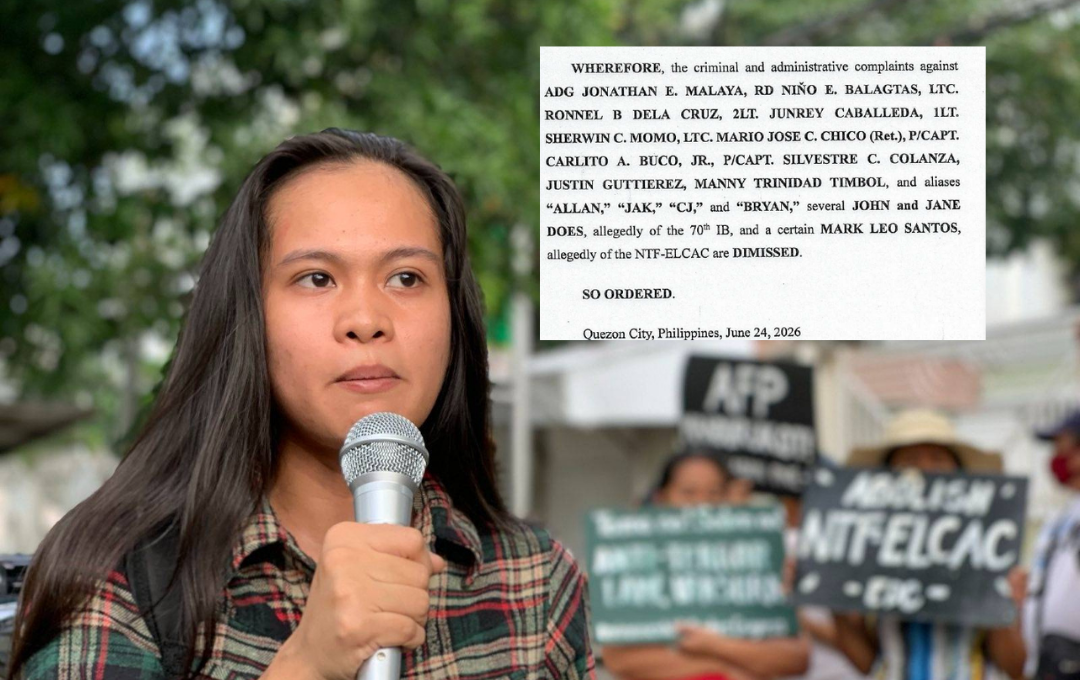
Two years. No hearings. Then dismissal. Kalikasan PNE condemns the Office of the Ombudsman’s Joint Resolution tossing out the criminal and administrative complaints filed by abducted environmental defenders Jhed Tamano and Jonila Castro against government officials and military personnel responsible for their kidnapping, illegal detention, and coerced ‘rebel returnee’ staging. Charges ranged from arbitrary detention and grave coercion to violations of the Anti-Torture and Anti-Enforced Disappearance Acts.
Tamano and Castro were two young women environmental defenders conducting research and consultations with fishing communities affected by reclamation projects in Manila Bay when masked men seized them in Orion, Bataan, three years ago in September 2023. In their sworn account, they described being blindfolded, interrogated, threatened, and forced to sign statements of voluntary surrender by elements of the 70th Infantry Battalion of the Philippine Army (AFP). They were infamously paraded as ‘rebel returnees” by the National Task Force to End Local Communist Armed Conflict (NTF-ELCAC) at a press conference, where they courageously defied their captors’ script and publicly exposed their abduction and coercion. Since then, the two have faced SLAPP cases and red-tagging.
Instead of reckoning with the evidence provided by the environmental defenders, the Ombudsman gave greater weight to the accounts of security officials and invoked the presumption of regularity in their favor. It even treated the absence of extensive physical injuries and the survivors’ inability to disclose their ordeal immediately – while under military control—as grounds to doubt their testimony. This reasoning revictimizes survivors, disregards the coercive conditions of captivity, and rewards state institutions for concealing the identities of perpetrators.
The abduction of Tamano and Castro represents just one case among hundreds of victims of state-sponsored violence. According to Global Witness, the Philippines remains Asia’s deadliest country for environmental defenders for the 11th consecutive year since 2012. Global Witness has also identified red-tagging and the weaponization of criminal law as pervasive tools for silencing Filipino defenders and reported military involvement in around two-thirds of the defender-arrest cases it examined in the country
This machinery of repression is being further entrenched through the Marcos Jr. administration’s National Action Plan for Unity, Peace and Development (NAP-UPD), which criminalizes and targets marginalized communities resisting extractivism and landlessness using a whole of nation approach. Far from delivering genuine peace, this militarized framework threatens to recast lawful organizing, environmental advocacy, and community resistance to destructive projects as security threats.
Tamano and Castro’s case is not an isolated case, but a deliberate strategy—and we will not allow it to go unchallenged.
We demand accountability for the abduction and ongoing harassment of environmental defenders. We call on the Philippine justice system to stand with victims, not with state actors who commit atrocities. We will not stay silent as the state escalates its attacks on those who defend our lands and environment.